AI Current Awareness in Teaching and Research
AI Current Awareness for Teaching and Research is a dynamic library service designed for university instructors, students, and the broader community, bringing together timely, curated, and engaging content on the transformative role of Artificial Intelligence (AI) in both teaching and research. It serves as a comprehensive current awareness hub, featuring the latest compelling stories, research articles, multimedia resources, and PowerPoint presentations that highlight emerging trends, innovative practices, and AI-driven discoveries and best practices shaping university teaching, learning, and scientific advancement.
Teaching and Learning Current Awareness
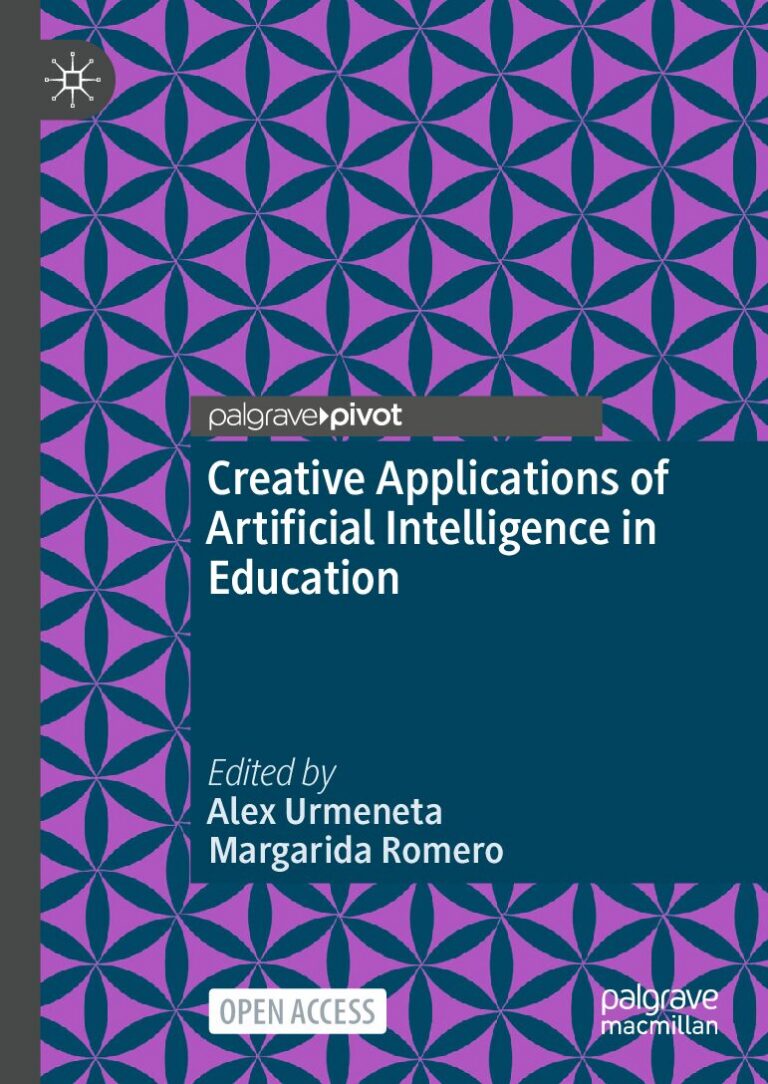
Creative Applications of Artificial Intelligence in Education
AI in education with a critical, creativity-focused lens, tracing technological waves in teaching and the rise of generative AI (LLMs) as a potential catalyst for major change. It contrasts techno‑solutionist optimism with sociocritical caution, stresses ethical priorities (privacy, wellbeing, equity), and argues for human–AI co‑creativity—positioning AI as a collaborator that can expand creative pedagogies across K–12 and higher education. The chapter outlines the book’s structure (creative engagement, K–12 examples, higher‑ed advances), and calls for nuanced, ethically guided integration of AI to support learners’ unique talents rather than replace human judgment.
View More
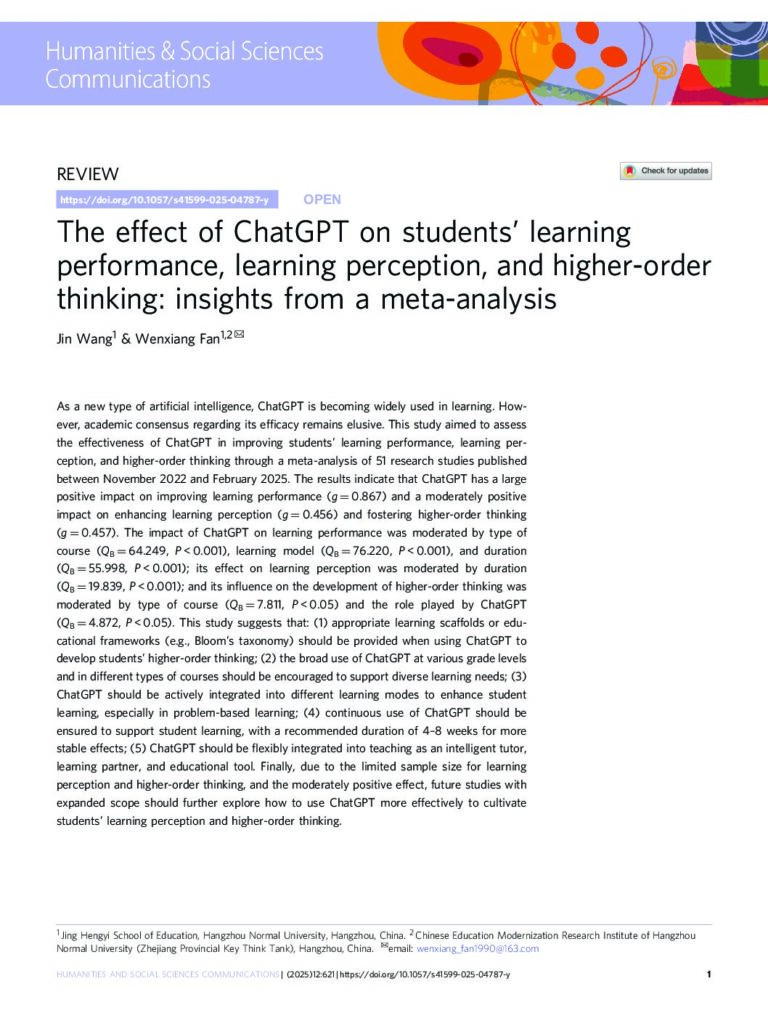
The effect of ChatGpt on student's learning performance, perception, and higher order thinking
Meta‑analysis of 51 studies (Nov 2022–Feb 2025): ChatGPT yields large gains in learning performance (g=0.867) and moderate improvements in learning perception and higher‑order thinking (g≈0.46); effects are strongest in skills/STEM courses, problem‑based learning, and with 4–8 week use—recommend scaffolded, context‑sensitive, sustained integration.
View More
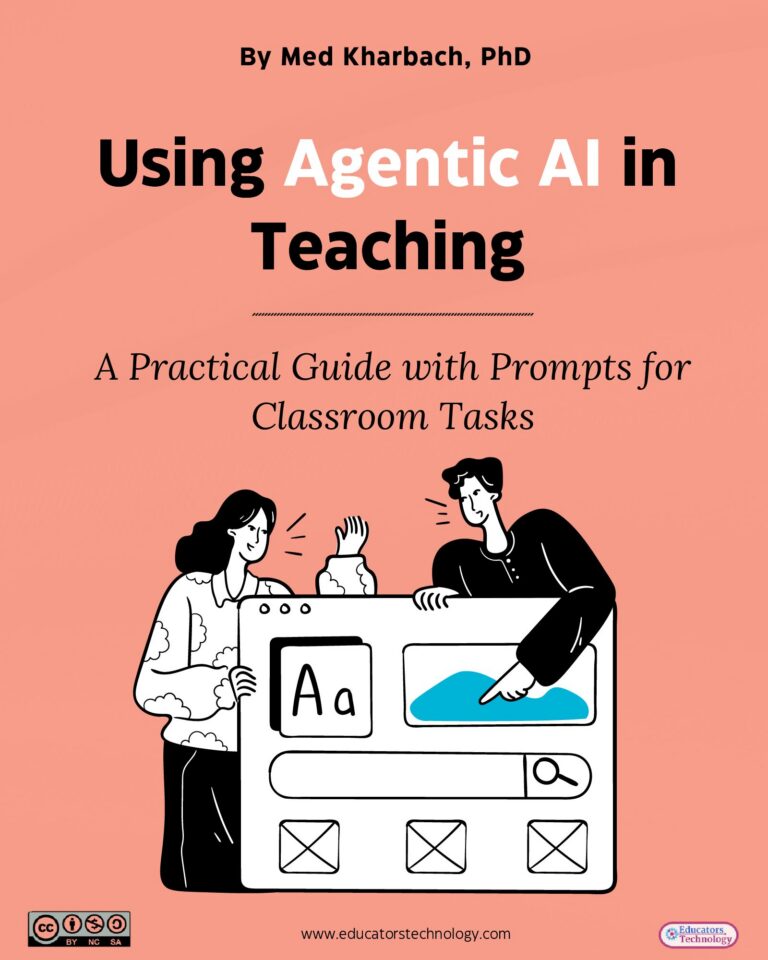
Using Agentic AI in Teaching
Agentic AI—exemplified by ChatGPT Agent—is an AI that can act autonomously to perform multi‑step classroom and admin tasks (web scraping, file editing, running code, connecting to Drive/SharePoint). For educators it speeds prep (presentations, lesson plans, resource gathering, data cleaning, PD packs, tool scouting, literature reviews) and hands over editable outputs, but requires active monitoring, precise prompts, and limits on sensitive access to manage privacy, hallucinations, web blocks and formatting errors. Best practice: start small, supervise runs, verify outputs, provide clear scaffolds, and use Agents as flexible tutors/tools rather than fully unsupervised substitutes.
View More
Research Current Awareness
Strengths, Weaknesses, Opportunities, and Threats of Using ChatGPT in Scientific Research
ChatGPT can speed and simplify scientific research by rapidly retrieving and summarizing literature, aiding brainstorming, translation, and teaching, but it has limits—contextual understanding, fact‑checking, critical thinking, and bias—raising risks of misinformation, plagiarism, ethical breaches, and diminished higher‑order skills; careful human oversight, proper attribution, and clear guidelines are essential for responsible use.
View More
Trend Report 2024 Literature Review (Preliminary)
This literature review identifies seven trends affecting information and libraries: changing knowledge practices and misinformation; rapid spread of AI and immersive tech with security and copyright risks; declining public trust; rising demand for complex digital and media skills; unequal access and digital-first services; growing environmental costs and e‑waste; and renewed focus on community connections. It calls on libraries to lead inclusive access, build critical skills, protect privacy/security, and adopt equitable, sustainable practices.
View More
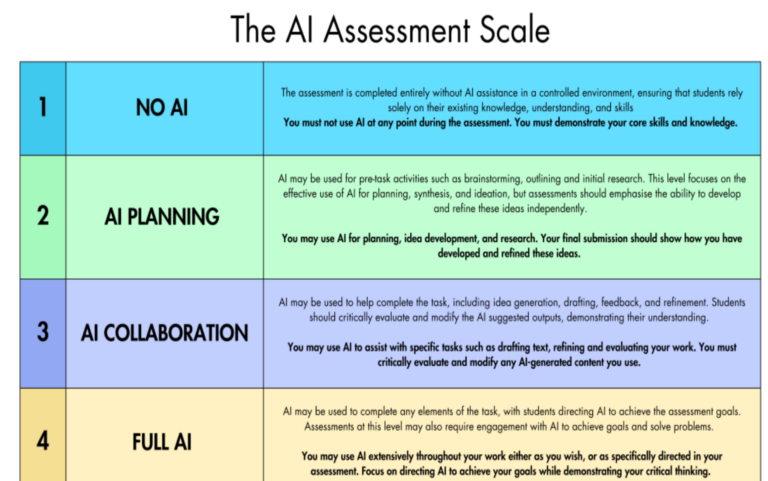
The AI Assessment Scale (AIAS)
View More